Introduction:
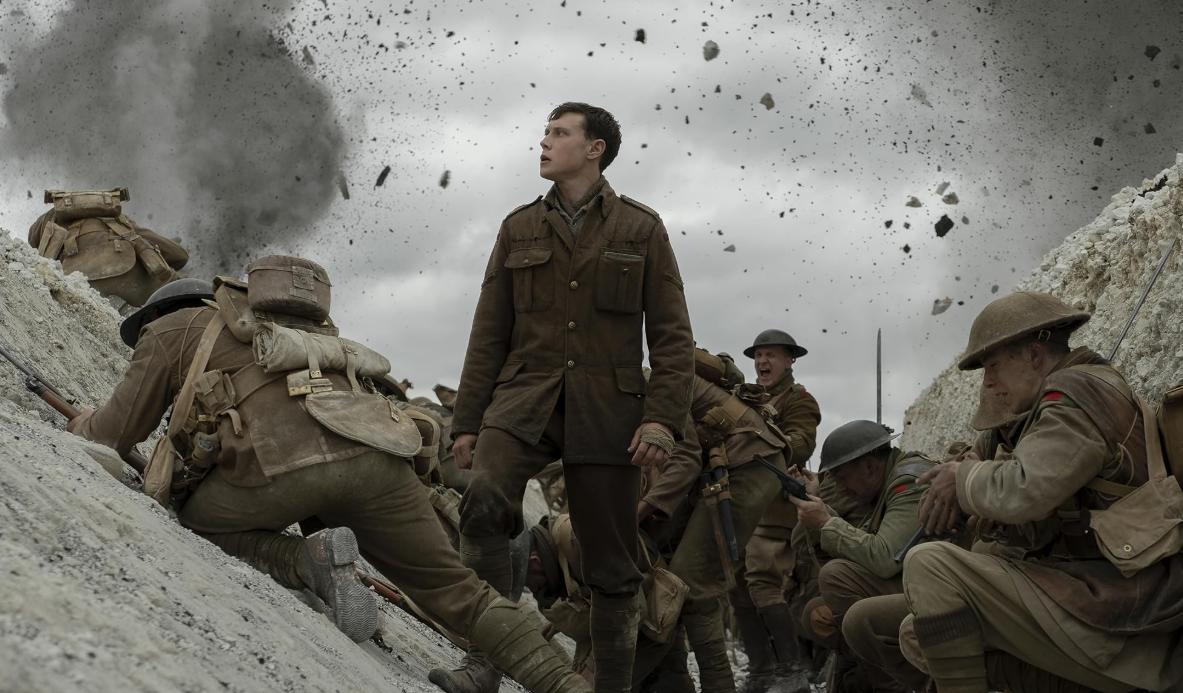
1917 is a movie where two British soldiers, Lance Schofield and Joseph Blake, must deliver a message that could save thousands of their men in the midst of World War 1. Personally, from the war movies I have seen, I would say they’re just fine. Usually, it’s a soldier, who is just one of thousands of men, who ends up changing the battlefield by some heroic act. However, after watching 1917, there is something distinct about it that sets it apart from any other war film I have seen. The cinematography makes the movie so great, mainly because of one aspect: it’s all filmed in one take.
The Story of 1917:
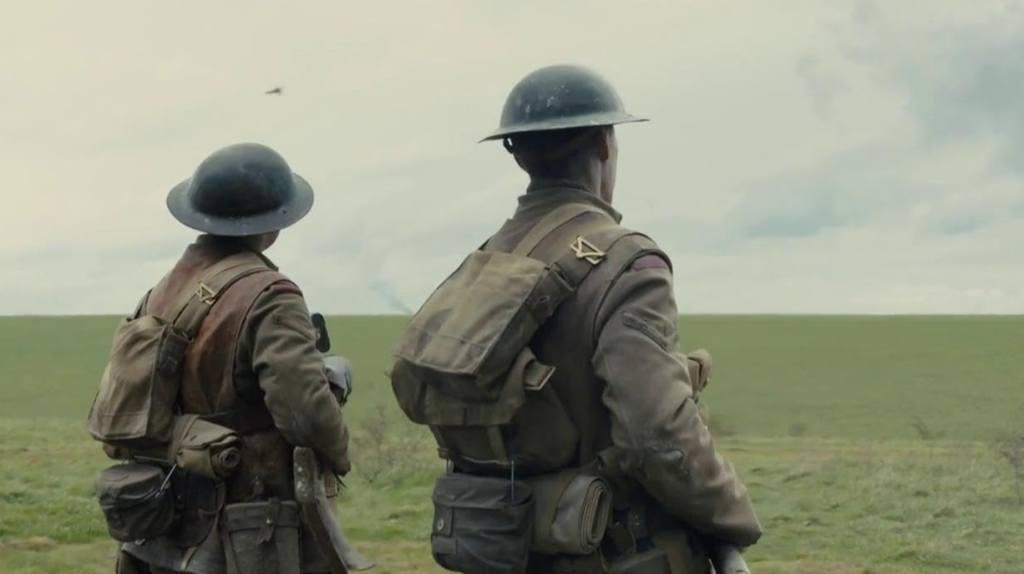
The movie begins with our main characters sleeping by a tree. They’re called in to complete an assignment to deliver a message to the recipient, a separate battalion of the same force. The two soldiers immediately set off, beginning our adventure. Along the journey, they go across No Man’s Land, German trenches, and plane crash sites. At this point, they help a wounded German soldier, but it immediately bites them in the butt as the German soldier stabs and kills Blake as he is helping him. Schofield takes Blake’s last words and reassures him that he will save the men in the other battalion (and his brother, who happens to be in the same group).
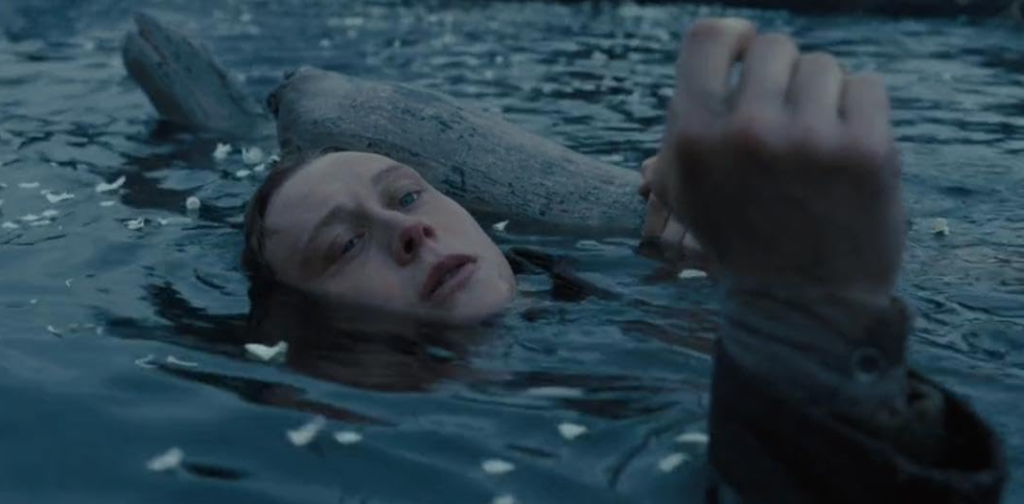
Schofield continues on, this time solo, traveling along country roads, through the town of Ecoust, where he is hunted, falls into a river, and onto the front lines of the War, where he must run with no cover to get from one end of the trench to the other. Alas, he reaches it and finds the Lieutenant in charge of the battalion, and delivers the message of calling off the attack. He finds Blake’s brother, too, and can conclude his mission. The movie ends with Schofield sitting down at a tree, finally able to relax.
How Cinematography Enhances Our Experience:
Now, everything I described could be argued for the stereotypical war movie I was talking about earlier, but the reason it’s so special is that it was all taken in one shot. When I say one shot, I mean under the illusion of one shot. It’s actually made up of many clever shot transitions to make it all look seamless. I am not very worried about the technical aspects of what makes it a “one shot” or not, but the effect it does give to the audience with the camera techniques pays off immensely. Also, during Schofield’s time in Ecoust, he was knocked unconscious in a gunfight with a German sniper. This provides a cut in the shot, but it makes sense because our main character is not awake.
The reason the cinematography is so effective is that it feels like we are really there with Schofield. There are no cuts, so we go through every single event along Schofield’s journey, experiencing every detail with him. During the tense moments, like when he is getting shot at by the sniper in Ecoust, he doesn’t know where the sniper is, but neither does the audience, so it puts us on the edge of our seats too. During peaceful moments, like the beginning and the end (primarily the end because it concludes the long stressful journey), we can relax and enjoy the peacefulness. If the film did have cuts, it could have been distracting and pulled us away from being immersed. 1917 has such a better way of connecting its content with the audience than any other war movie.