
If you play a college sport right now (or really if you follow college sports at all), you have definitely seen social media updates say:
“Athlete X is entering the portal.”
At this point, it’s almost just normal. Just a few years ago, transferring felt much more dramatic. But just because it’s common now doesn’t mean it is always simple. As a Division III athlete, our program doesn’t deal with the scholarships or NIL opportunities the same way Division I does, but the transfer portal still affects us. It has big impacts on team culture at any level. So let’s break it down.
What is the NCAA Transfer Portal?
The transfer portal is essentially a database run by the NCAA that lets athletes say that they are exploring transferring. Here’s what the process is actually like in real life:
You go to compliance.
You say you want to enter.
Your name gets added to the database.
Coaches from other schools can now contact you.
That’s it. Pretty easy. It doesn’t necessarily mean you are for sure leaving. It just means that you’re open to it. But your current coach, of course, is notified so that can change things regarding dynamics between you and your coach. You are no longer “all in” to the program.
Since 2021, athletes can transfer once and compete immediately under NCAA rules. Before this change athletes had to redshirt (sit out of official games for a season, but still practice and travel with the team) if they transferred. In April 2024, however, the rules changed again allowing players to transfer as many times as they wanted without restrictions.
Why Do Athletes Enter The Transfer Portal?
From what I have seen (and experienced from those around me), it is usually not just about one thing. Of course playing time is a big one. We all want to compete But sometimes it’s:
- A coaching change
- Burnout
- Not fitting in socially
- Realizing the academic program isn’t for you
- Cuts from current program
- Mental health
Everyone’s situation and motivation for deciding to transfer is a little different.
The Pros: Why the Transfer Portal Can Be Positive

Let’s be real, sometimes transferring is the best decision for an athlete. The portal can give someone the fresh start they are looking for, a team system that fits their style of play better, a campus that feels more like home, and in some divisions, better financial or NIL opportunities.
I’ve watched a close friend of mine transfer from D1 to the same D3 as me and has thrived here. In his first season here, he helped lead his track team to an indoor conference championship (the program’s first since 1989). Reflecting on his transition, he shared, “I’ve grown more here because I’m valued beyond my performance. I think that has made me more confident – not just as an athlete, but as a person.” His experience is proof that confidence comes back. Love for the sport can come back and that’s the part that really matters, especially at the Division III level.
The Cons: The Parts of the Transfer Portal People Don’t Post About

Here is the unfortunate truth. Not everyone who enters finds a new home. Roster spots are limited. Coaches are recruiting high schoolers and transfers at the same time so transfers are competing against many other athletes for a spot and coaches may prioritize the high school recruits. And once you are in the portal, your current position is no longer guaranteed.
There is also an emotional factor in play. Imagine having to basically go through the whole recruiting process over again. Reintroduce yourself to coaches, send them film, explain why you are leaving, wait for responses, only this time the stakes feel higher because again your old spot isn’t secure anymore. This uncertainty can be emotionally draining. The portal gives athletes freedom, but it comes with these risks.
Questions to Ask Yourself Before Entering The Portal
Before taking this career-changing step, take a deep breath and reflect:
- Have I had an honest conversation with my coach?
- Would I choose my current school again if my sport ended tomorrow?
- Am I prepared for the chance that I may not receive another offer?
- What am I risking academically and financially?
- Are these thoughts short-term frustration or about long-term goals and fit?
- NCAA Resources
Deciding to enter the portal should be a thought-out choice, not just an emotional reaction
The Bigger Picture
The rise of the transfer portal combined with the debut of NIL has changed the world of college sports and it isn’t just a small wave. In 2024 alone, over 15,000 Division I athletes transferred to another NCAA school. That is a large-scale shift in the system.
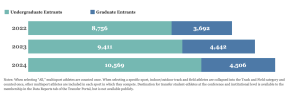
Division I transfer portal entrants who transferred to another NCAA school (2022-2024). Source: NCAA Transfer Portal Data
And what stands out to me for the portal data? Nearly a third of those athletes are graduate transfers. This is mainly because of extra COVID eligibility. So the portal is clearly not just freshmen who leave because they aren’t playing. It’s fifth-year seniors, captains. These athletes who have already had a career somewhere and are looking for something different too.
And while football often dominates portal headlines especially for D1 because of popularity and roster size, the portal isn’t just a football story. The effects reach every sport, even smaller programs like ours. Even just one transfer in or out can shift team dynamics.
Should You Enter The Transfer Portal?
There is no answer fit for everyone. For some people, the portal is a good place to find a better home. For others, staying and pushing through the discomfort might be the best for their career and personal growth.
What I do know is this: It is a big decision that deserves a lot of thought (more than just a late-night frustration). Your college experience is more than one (rough) season. If you do decide to enter the portal, make sure you fully understand eligibility requirements and make sure it is because you are moving toward something better for you, not just reacting to something difficult. And most importantly make sure wherever you end up, it’s a place where you can grow as a person first, athlete second (that’s what really levels the playing field).