By Elliott Cook on March 1, 2026 at 5:00 PM
Why are athletic facilities so crucial? This is a question that many people including myself at one point had. The answer is simple. Athletic facilities can directly determine the potential and development of an athlete. People are a product of their environment, all the way from their morals when they’re growing up in their households, or their work ethic as they spend more time in their business environment. Athletic facilities are no different. The better the facility, the better the athlete develops.
The Spread
Though good athletic facilities create better opportunities for their athletes, it widens the divide between skill levels in collegiate divisions. Think about it. The better athletes typically go to a D1 school, and other athletes fall mainly into D2 and D3. Considering D1 programs typically have better athletic facilities than D2 or D3 usually due to a budget, D1 athletes continue to improve at a faster rate than the D2 and D3 athletes do. This slowly creates a bigger difference in the skill levels of D1 and D3, as the athletes that already are more skilled continue to improve at better rates than the other athletes.
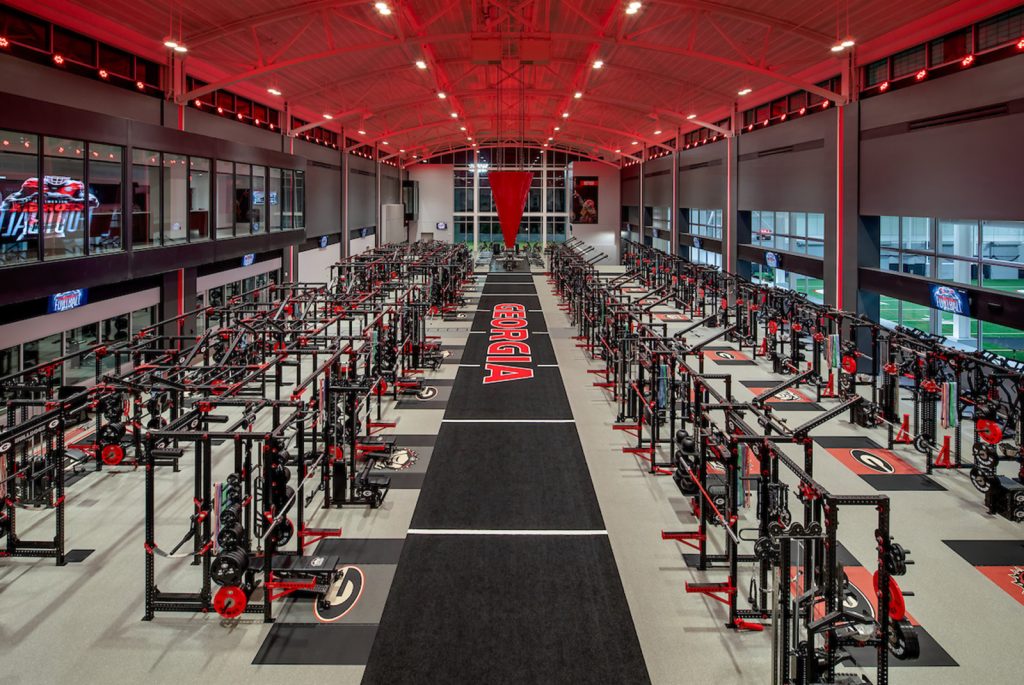
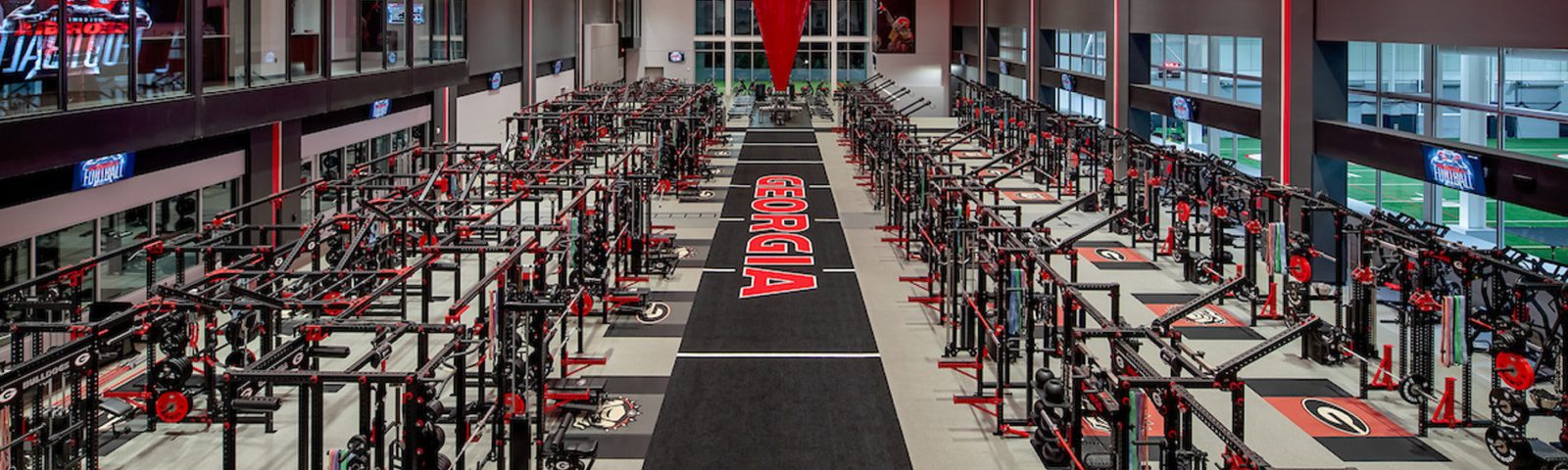
Georgia training facility, showing the difference in scale when you get to a really high D1 level program.
Is this fair?
This creates an argument. Is this fair or unfair? Well, it depends on the perspective of who you ask. Most people would support the idea that college athletics take a lot of hard work. Therefore, many would think that those who have worked hard to earn a spot on a D1 team deserve to train at the level they earned. On the other hand, some might believe that any athlete that competes at a collegiate level deserves to train with good facilities, and be able to show off their skillset as they train potentially to the level of a D1 athlete. Both viewpoints make sense, but it creates controversy nonetheless. What could schools do to level the playing field?
Colleges could start by just being more transparent as to why there are the differences that there are. Instead of trying to be more equal, make people understand why there are differences. Schools can explain how more exposure leads to media deals, sponsorships, and ticket sales. The budget difference created across divisions is a leading reason as to why there can be such a difference between divisions. Something D3 schools could do is prioritize the quality of their facilities over the luxury. As opposed to investing money into lounge areas and max stadium seating (which won’t be filled anyways), they can focus on better locker rooms, better practice areas, and better nutrition for their athletes.
The best thing schools could do to be considered on a similar level is to adopt a “Division III mindset.” Prioritize academics, broad participation, and athlete well-being. When recruits choose D3 for those reasons and still see clean, functional, athlete-centered facilities, expectations are aligned and controversy decreases. In short, D3 doesn’t need to look like D1 to feel legitimate. If schools provide safe, modern, and equitable spaces, communicate funding realities, and prioritize athlete health and fairness, a D3 athlete’s appreciation for their schools facilities could be much more prevalent, and contribute to their overall success.