If you’re reading this article, you may already be familiar with what a reading journal is. For anyone who doesn’t know, these journals are the perfect way to track reading progress, personally rate books, and unleash creativity. This is a way to seize full artistic freedom and honor these literary works however you see fit. All you need is a blank journal and a little inspiration! Below are nine ideas to put in your reading journal, but remember, you can personalize this however you like. The possibilities are endless.
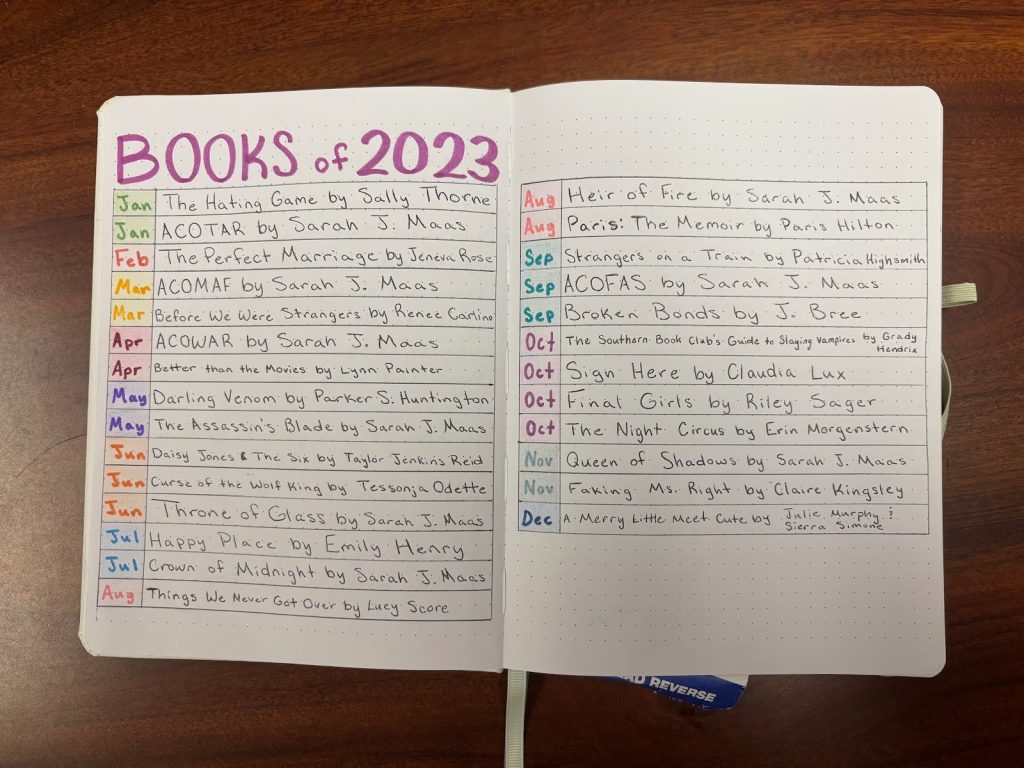
1. Simple tracking
The most basic use of a reading journal is tracking the books you’ve read. There are many ways to do this, such as simply making a list, inserting images (printed or otherwise) of the books you’ve completed, or using a similar layout to the one found above. Some people like to include other details, like what they rated the books and when they completed them.
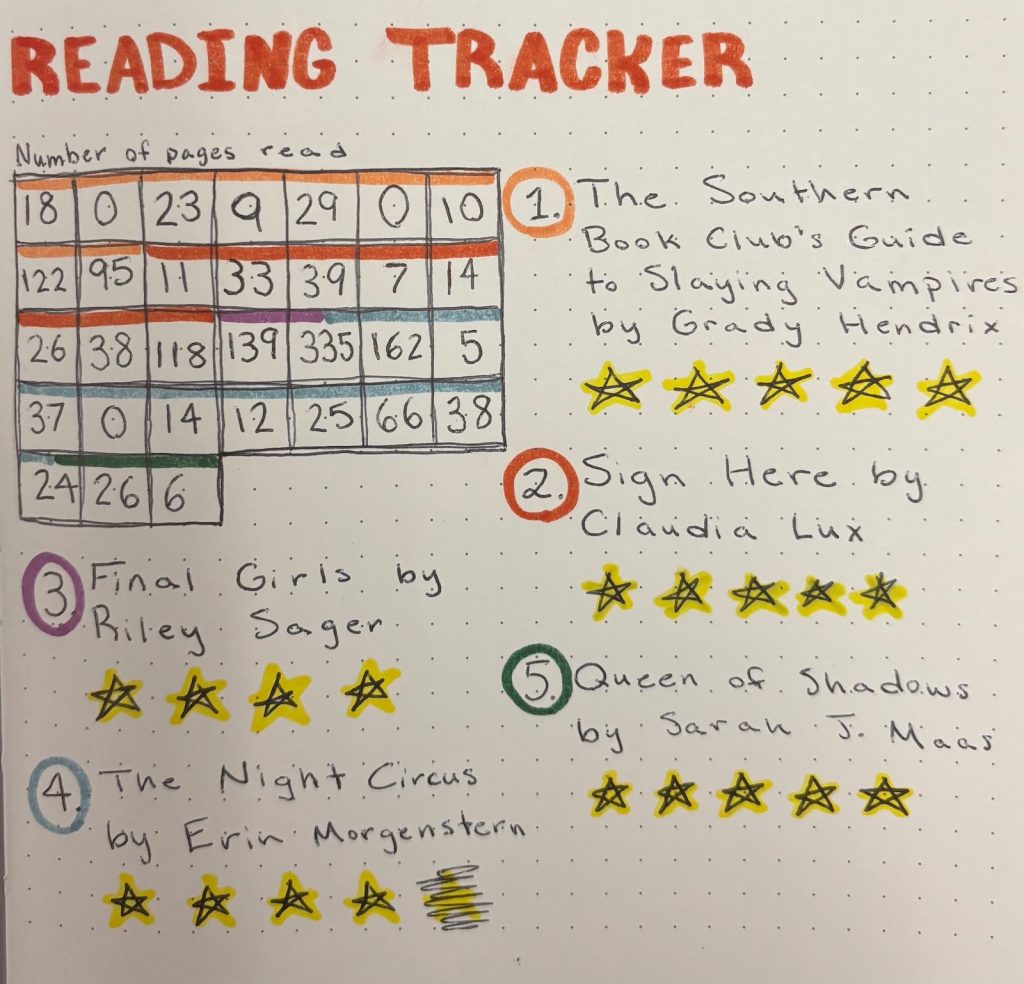
2. Pages read per day
For those looking to challenge their daily reading quota, keeping track of how many pages you’ve read may be useful. This can be made easier with some form of calendar. The image above shows how I tracked my pages read per day for a month. Each book is colorcoded to make the calendar as simple as possible. I also included my ratings. There are many ways to record page count, so if this style doesn’t work for you, just keep in mind, there are many more options.
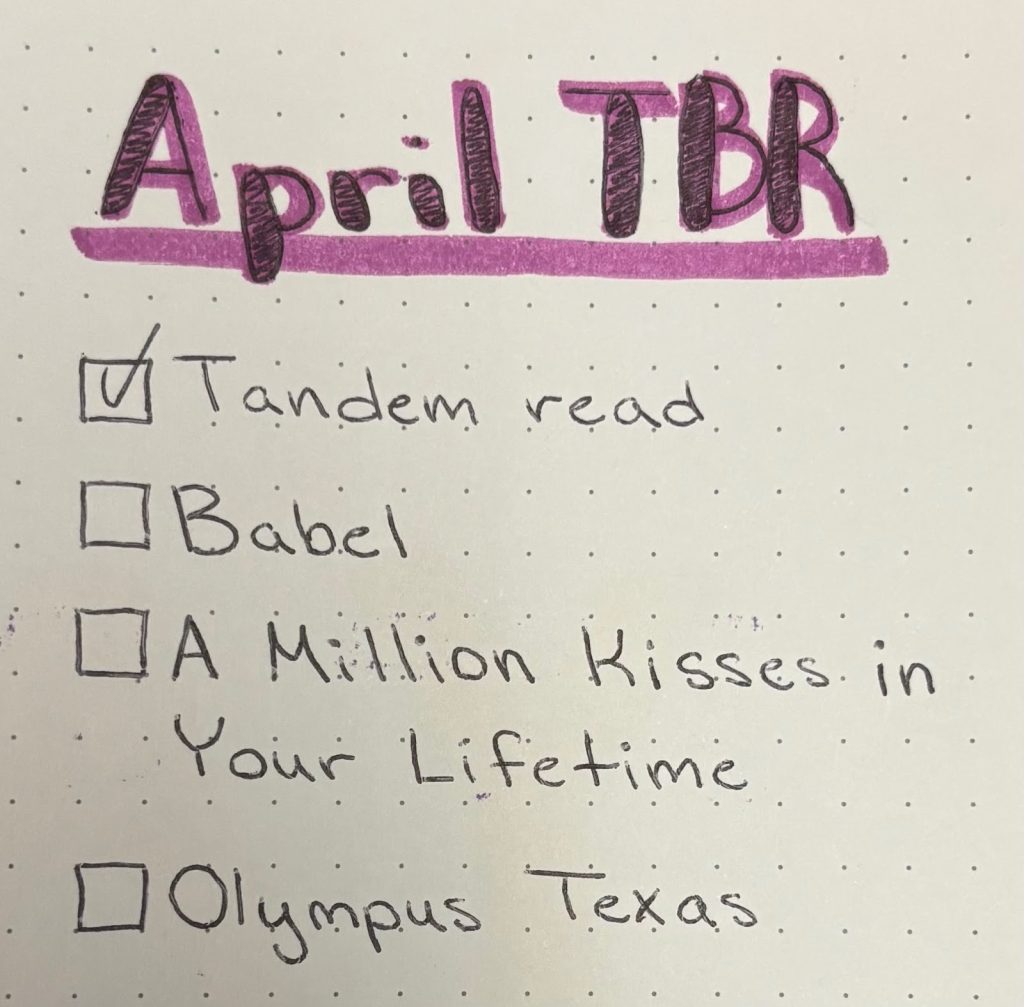
3. TBR list
A great way to keep track of future reads on the horizon is to create a TBR list. For anyone unfamiliar with the term, “TBR” stands for “to be read”. There are so many books left to read and they can’t all be your next pick. A TBR list can help prioritize what you will pick up next. The image above depicts the TBR I created in April of 2024 – I’ve read all of those books since then.
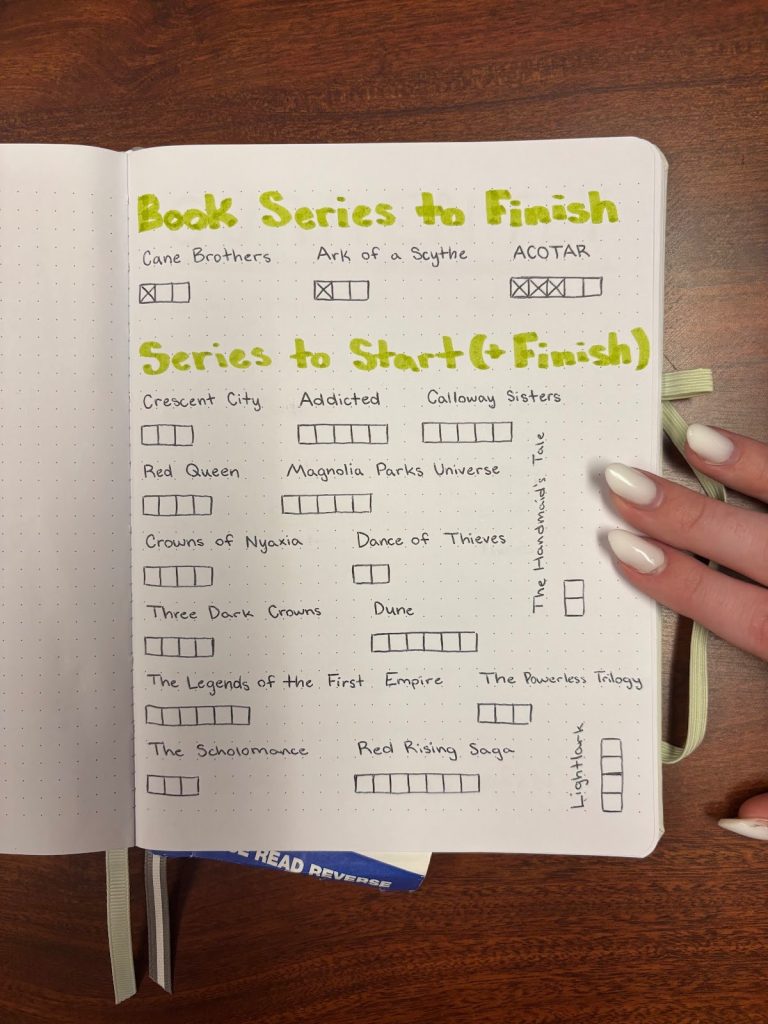
4. Series tracking
Whether reading a duology, a trilogy, or a fifteen book series, a series tracker can help create a visual of how many books you’ve completed and how many you have left. The visual above is how I chose to arrange my tracker, but really, the only thing that matters is how you would like your own tracker to look. As long as you understand it, no one else has to.
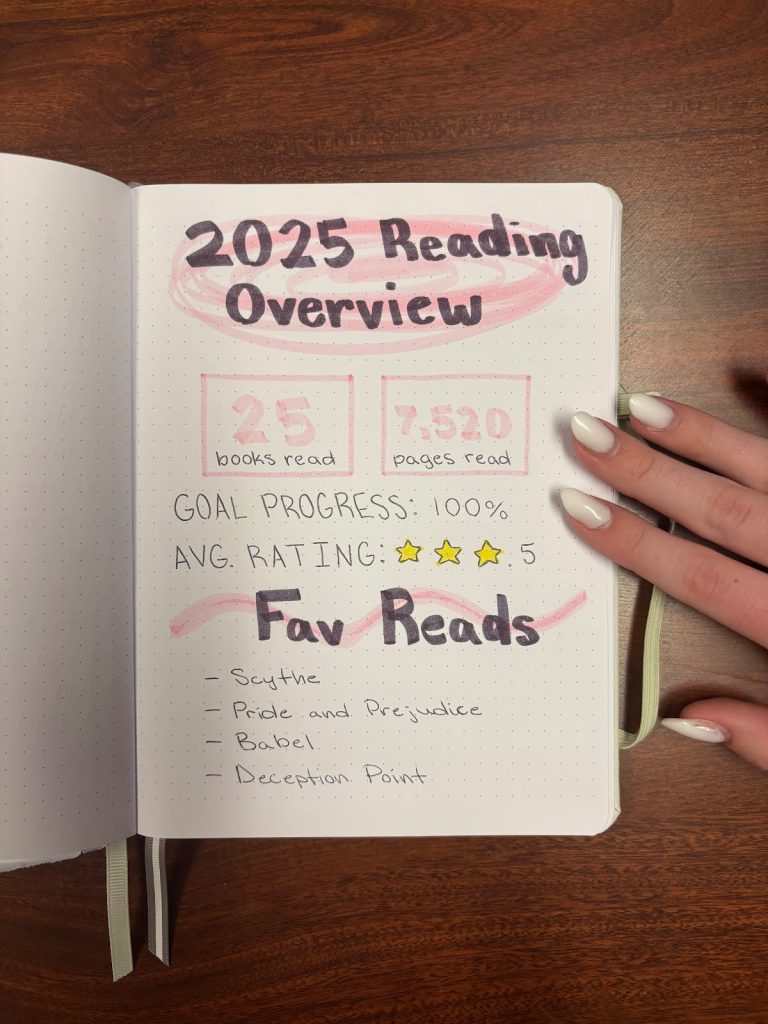
5. Keeping stats
Some people who use reading journals like to keep monthly or yearly stats. These book stats are all based on the information you choose to record. Part of the joy of tracking how much you read is getting to see how many books you completed in a certain period of time or how many pages you read. It is a great way to give yourself a pat on the back if you met your goal, and the opportunity to analyze and improve if you didn’t quite reach it. I also included my favorite books of the year in my stats. It’s all about hunting for that five star read, right?
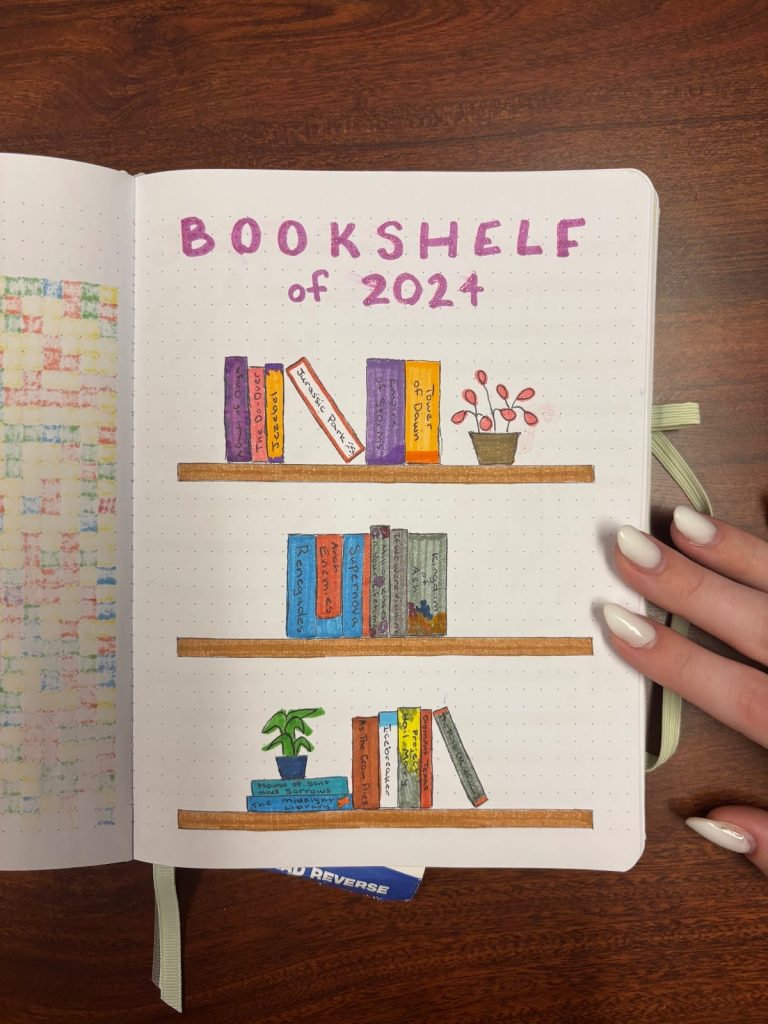
6. Getting artsy
When keeping a physical journal, part of the fun is just personalizing it to yourself. You can design your journal however you like. I personally enjoy getting a little creative and putting my coloring skills to the test. One example of this artsy tactic, shown above, is my Bookshelf of 2024. This was both functional at displaying all of the books I read that year at a glance, and it was a fun project to continually work on. Other book journalists might create a collage dedicated to a book they liked, draw or insert a photo of each book they read, or create something totally unique.
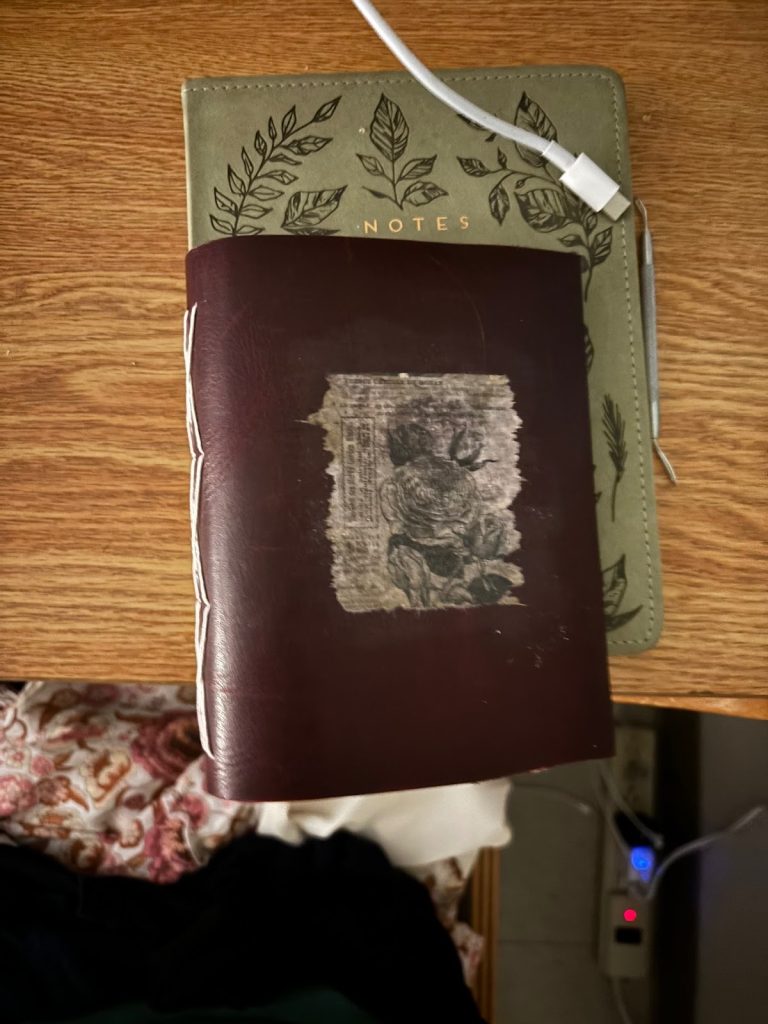
7. Book binding
If you are bored of the basic exterior of a journal, you may enjoy creating your own. Book binding is a way to take your personalization a step further. The image above is only one of many ways you can craft your own journal. While binding books can be meticulous and often time consuming, the finished product is well worth it.
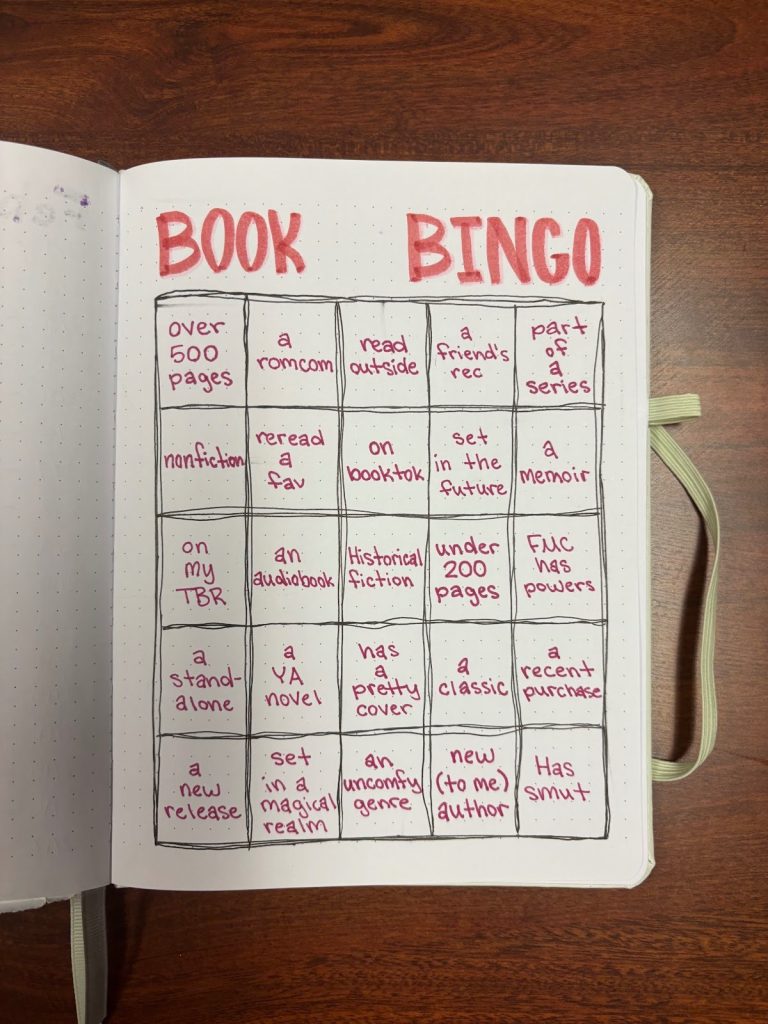
8. Other book journaling ideas
There is truly so much potential when it comes to this journal. You could fill a page with your favorite book quotes. You could make a list of reading goals for the year – or month. Above, you can see a page I dubbed as Book Bingo. You could designate a page for rating each book. Some journalists keep a portion of their journal which showcases their favorite books from each month. The possibilities are well beyond this list, but hopefully this is enough for you to start with.
9. More inspo!
Here are a few more resources to help you curate your reading journal:
Leave a Reply