
What is animation?
Animation is a storytelling medium with its roots far back in our history. Characterized by frames played in sequence to create a moving image, much like film. Though widely considered childish, Animation is anything but!
Proto-Animation
The human fascination with motion has persisted for millennia. We have long been enthralled by the nature of motion, and we’ve been trying to create it ourselves for almost as many years.
In fact, as recently as 2022, Historians discovered evidence suggesting that as far back as 15,000 years ago, we made pictures move. Early artisans made their work dance across the stone of caves using the dynamic nature of firelight, to create the illusion of motion in their carvings. Prehistoric Spielbergs using Shadows and Light in tandem to bring their illustrations to life.
Fast Forward to 2000 years ago, during China’s Han dynasty and Shadow Puppetry takes center stage. Using candlelight and cut paper, puppeteers would tell intricate stories by placing their puppets between the light and a translucent sheet of paper or fabric that acted as a screen. While not technically animated, remnants of the stylization and puppet-making techniques still cast shadows over modern digital animation.
The Magic Lantern, developed in the 17th century, was a sort of rudimentary projector. We’re not exactly sure who invented it, as there were a plethora of variations. Like other forms of proto-animation, the Lantern used a candle. Instead of carvings or paper, illustrations would be painted onto glass slides.
A rudimentary version of what we now consider film cells, a crucial step forward in the world of motion pictures in general.
Early
Collectors largely saw early forms of proper animation as a curiosity as opposed to an art. Or in the case of the Thaumatrope, a toy.
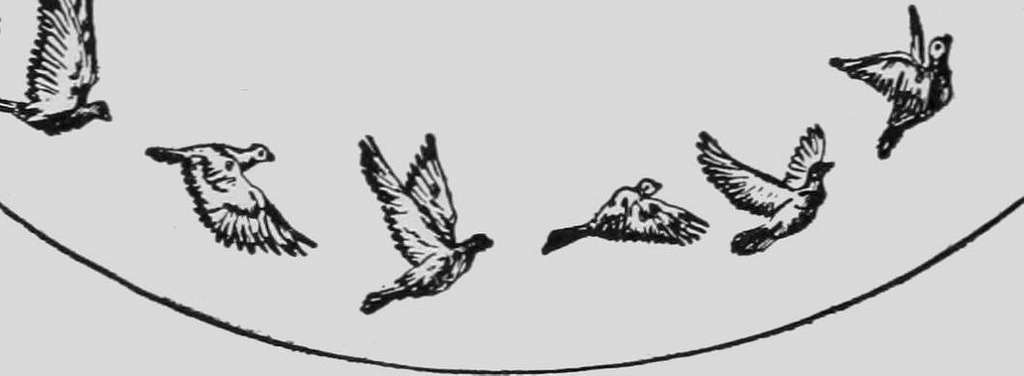
The Thaumatrope was a small wooden disc, with strings on either side that when spun, would show a dynamic image. The portable nature and ease of use made the thaumatrope a neat toy or parlor trick regardless of age, despite the fact that the primary market for the device was children. And, sure, it’s not quite animation by modern understanding but it still was a step towards creating illustrations that moved.
The next major step in moving images was the Phenakistoscope, a wooden disk with a series of illustrations painted on its face and then spun on its center point. This creates the effect of short looping animations, the Victorian equivalent of a GIF(That’s with a hard G, btw. It’s called Graphics Interchange Format, not Jraphics Interchange Format). Her sister, The Zoetrope, uses illustrated slides with small gaps between them placed perpendicularly on another central disk. The Zoetrope is most effective when viewed from the side at eye level, where the spaces between the slides create an aperture to better see the animation.
The Kineograph, or more commonly, the Flip Book, is a very familiar form of animation. I’d hazard a guess you’ve probably even done it yourself! I mean, we’ve all doodled stick figures in the margins of our school books and flipped between the pages to make them dance, and that’s the foundation for this particular animation method.
Early Modern
in 1888, the invention of Celluloid film rocked the world of motion capture. This thin plastic invention was an innovation like no other, making film cameras smaller and more portable, as well as making animation as we know it today possible.
Though, first, we ought to glance at the Théâtre Optique. Charles-Émile Reynaud patented the device also in 1888, an extrapolation on a Praxinoscope that he had invented almost twelve years prior. The device used a praxinoscope and a series of mirrors to project animated characters onto stationary background images, in fact, a similar idea was carried over into more modern techniques.
The Théâtre Optique’s innovation was short-lived, however, as in 1895 the Lumiére brothers patented a device they called the Cinematograph. Though the name comes from another device, the Lumiére brothers’ invention was mostly their own. This Cinematograph was an early projector, that made filmmaking as we know it possible.
Modern
With animation and film becoming easier to produce, we begin to see a departure from individual artists. Thus came the birth of the Studio.
1910s
The 1910s see these studios in their infancy, one of the many prominent figures being Buxton and Dyer, a pair of British artists who put their cartoons to film during the First World War(NYT, Eat your heart out).
The invention that really shook up the way we understand motion was Max Fleisher’s Rotoscope. Patented in 1915, the revolutionary “Fleisher Process” changed the way that artists understood fluid motion. Fleisher would trace a moving image, usually a recording of his brother Dave, allowing for a much more naturalistic result. However, the form proved unwieldy, as the inconsistency of linework and time sunk into tracing made the process much more time-consuming than animating by traditional means.
1920s
The 1920s saw The Fleisher brothers’ beginning to incorporate synchronized audio alongside their films, in fact, The Fleishers are responsible for the “bouncing Ball” iconography used to encourage audiences to sing along to what they’re watching. Though brewing in the shadows of obscurity was another player who would change the game.
Walt Disney, at the time a cartoonist working for The Slide Company, was perfecting his craft alongside fellow animators Ub Iwerks and Fred Hartman. The three worked primarily on producing short animated commercials, eventually introducing their own short-lived studio, Laugh-o-Gram.
1930s
In the 1930s Animation really found its footing. The closest so far to where we understand it today. This is when color animation became the “next big thing”, and creating a more “real-looking” visual experience through animation was the central focus.
In 1937 Walt Dinsey Studios released Snow White. Early on, the studio made a multitude of short films and cartoons, but the first fully voice-acted, scored, color-animated feature the Studio created was Snow White. For the sake of Snow White, Disney extrapolated on an existing concept, the Multiplane Camera. Multiplane Cameras are one of the ways an artist can produce depth in traditional 2D animation. Essentially, the camera is mounted on a rig that is a number of layers tall, with background elements painted on glass and then layered on top of each other to create the illusion of depth. The animation cell is then placed between, or on top of, the layers, and a picture is taken, resulting in a frame with depth.
Though we don’t use Multiplane Cameras as we know them today, the technique has carried over to Video Games. Oftentimes, video game studios will use software like Unity to create a 3D space for the background elements to exist in for the sake of creating a similar effect.
In video games, we call this effect Parallax Scrolling, where the background moves at a different speed than the foreground. the background elements are quite literally further away in 3-D space, which makes it feel more real because of the way the human brain processes distance.
Where are we Now? (conclusion)
After all that, contemporary animation has big shoes to fill. Animation is constantly changing, It’s an exponential upward curve of innovation.
For example, in Disney’s Tangled, a new program, “Dynamic Wires“, was created for the sole purpose of animating Rapunzel’s hair. The average human has somewhere around 100,000 strands, and with the help of software designer Dr. Kelly Ward, those strands were pared down and animated in clumps. Disney Pixar has been doing this for decades, this is the thing that Disney is best at, innovation through animation.
A really good example of animation in a place that you might not imagine it, is James Cameron‘s Avatar. The whole film uses motion capture, which is essentially rotoscoping in 3D space. Any movie that uses this motion capture is technically using animation. Even VFX is animation, animating what they can’t make in the props department over top of what’s going on in the background.
Animation is pervasive in all forms of entertainment, and it isn’t going anywhere anytime soon.