10 songs that perfectly fit their album covers
People say not to judge a book by its cover, but no one ever said anything about albums. While an album cover doesn’t necessarily make or break the music, it is a crucial part to marketing and crafting how the album is perceived. There are many iconic album covers that come to define the album, the artist, and even the genre overall. A good album cover sparks memories of the sonic journey you were taken on the very first time you listened to the album. As the songs tell a story, so too does the cover. While album covers are generally meant to be representative of the whole album of songs, sometimes they seem to embody one particularly stand-out song in the bunch. This has increasingly become the case because of the way most people consume music now, which is on online streaming platforms. When the primary mode of music media consumption was buying physical copies of the album, the songs were a packaged deal. Now, a song is displayed with the cover of the album it’s on, but a user can listen without ever having to look through the rest of the songs on the album. These songs in particular are mostly from the 70s and 80s, as that’s what I tend to listen to, but they are timeless examples that stand out as especially fitting for their album covers.
- “Suspended in Gaffa” by Kate Bush from The Dreaming
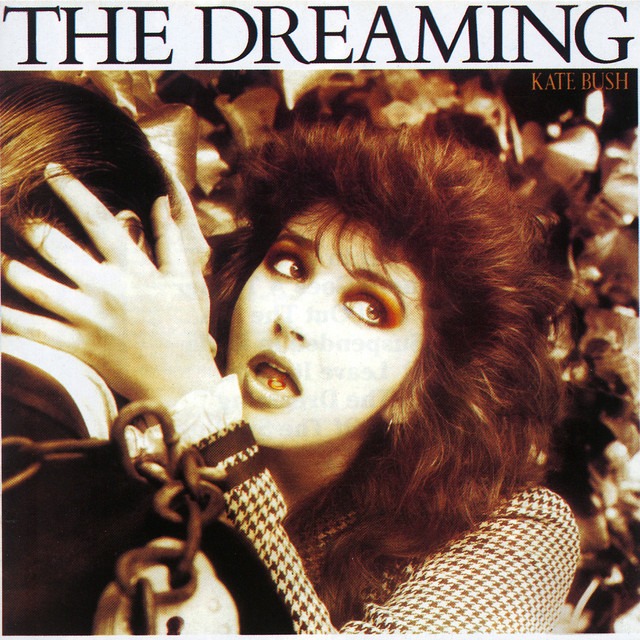
This song is track 4 on the album The Dreaming by Kate Bush, which is her fourth album, released in 1982. The cover features Kate Bush herself, dressed in a long-sleeve houndstooth top with ruffle trim and two black stripes at the wrist. She holds a man’s face in her hands as he appears to be in the middle of going in for a kiss. A lock is seen over his shoulder, with the golden key to unlock it resting on Kate’s tongue. The scene is a reference to track 9 on the album, “Houdini.” It tells the story of the escape artist Harry Houdini and his wife Bess passing off the key used for their routine via a kiss. The man in the photo was the audio engineer and bassist for Kate’s band as well her partner at the time, Del Palmer. The color palette is a sort of sepia-toned greyscale, with a strong orange-red tone around the eyes and coloring the key in her mouth. It’s sensual and provoking without being explicit or blatant. The styling of her makeup, hair, and outfit add the perfect level of sophistication, while the foliage in the background emphasizes the romantic aesthetic Kate is known for. In relation to “Suspended in Gaffa,” the ivy also alludes to the garden mentioned in the song.
“Out in the garden, there’s half of a heaven And we’re only bluffing – we’re not ones for busting through walls”
“Suspended in Gaffa” is about yearning to reach perfection without having to put in the work perfection takes. Gaffa is referring to gaffers tape, which is a cloth-like black tape that technicians use in film production. This conjures imagery of being suspended in a woven web of metaphysical gaffa.
“Suddenly my feet are feet of mud It all goes slow-mo I don’t know why I’m crying Am I suspended in gaffa?”
The song touches on the idea of forbidden knowledge, which is a metaphorical key that unlocks the unknown. Part of the human condition is that we strive for knowledge that we think we are ready for, but we don’t realize the implications of that knowledge until it’s too late, like Adam and Eve, or, as alluded to in the song, Pandora and her box. We don’t fully understand our weaknesses, shortcomings, and unworthiness until we stare face to face at everything we are in the mirror of retrospection.
“I won’t open boxes that I am told not to I’m not a Pandora, I’m much more like That girl in the mirror between you and me She don’t stand a chance of getting anywhere at all”
- “Sleeping With the Television On” by Billy Joel from Glass Houses
This song is number 7 on Billy Joel’s seventh album Glass Houses, released in 1980. Billy Joel himself is shown with his arm wound back, ready to chuck a rock into the floor-to-ceiling windows of his own house. The title refers to the old adage, “people who live in glass houses should not throw stones.” In the song “Sleeping With the Television On,” he’s absolutely throwing stones at glass houses. He pokes around at his own insecurity, labeling himself as “afraid of rejection.”
”I really wish I was less of a thinking man And more a fool who’s not afraid of rejection”
And yet he criticizes the woman he sings about for being too picky because she must be the one who’s actually afraid. He claims she doesn’t give anyone a chance because of past experiences.
“You’re only standing there ’cause somebody once did somebody wrong”
He shifts the responsibility on her for his loneliness, singing that both of them will go home alone and be “sleeping with the television on.”
“”I’ll just be standing here ’cause I know I don’t have the guts to come on And I’ll be sleeping with the television on”
Billy Joel himself said in a 2016 radio interview, “It’s about a guy who’s putting a girl down, but he’s putting her down because he knows she’s going to reject him if he comes onto her. So it’s sorta like sour grapes.” He’s judging her for being unapproachable while being unapproachable himself, and both characters are seemingly dooming themselves to be alone.
“Your eyes are sayin’, ‘Talk to me, talk to me’ But your attitude is ‘Don’t waste my time’ / But I won’t say a word ’cause it just might be somebody else’s same old line”
- “Just What I Needed” by The Cars from The Cars
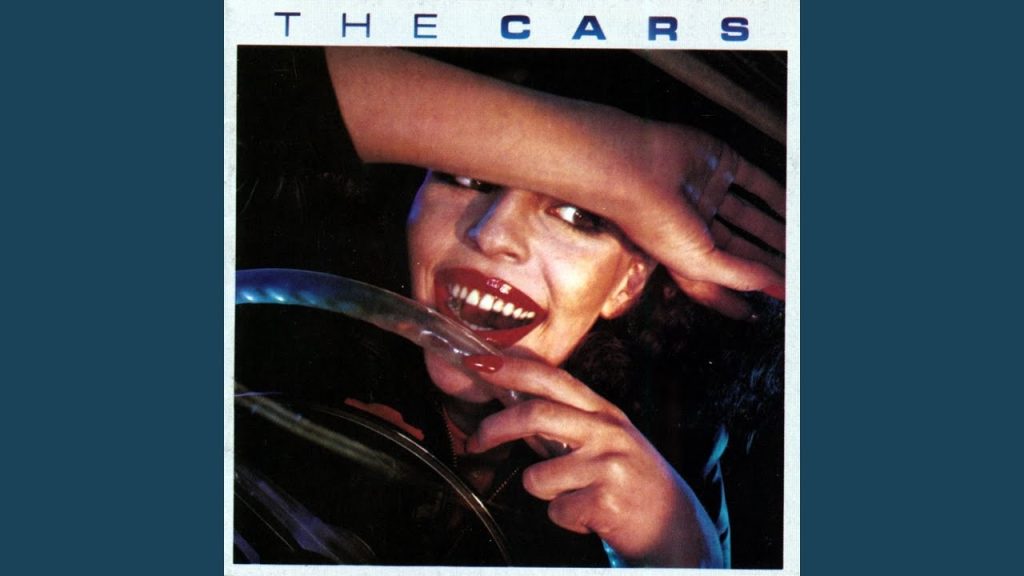
This song is track number 3 on the self-titled debut album The Cars from 1978. This cover features the Russian model Natalya Medvedeva as the girl laughing behind the steering wheel. Emigrating to the United States in 1975, she worked in modelling, including for Playboy, but she also is recognized as a poet, novelist, and singer. In the album cover, she looks jovial and carefree, her red lips and nails contrasted with the cold blue rim lighting. The band members actually didn’t like this cover, and originally had something else in mind. The drummer, David Robinson, designed a black and white collage that doesn’t have nearly as much personality as the final cover.
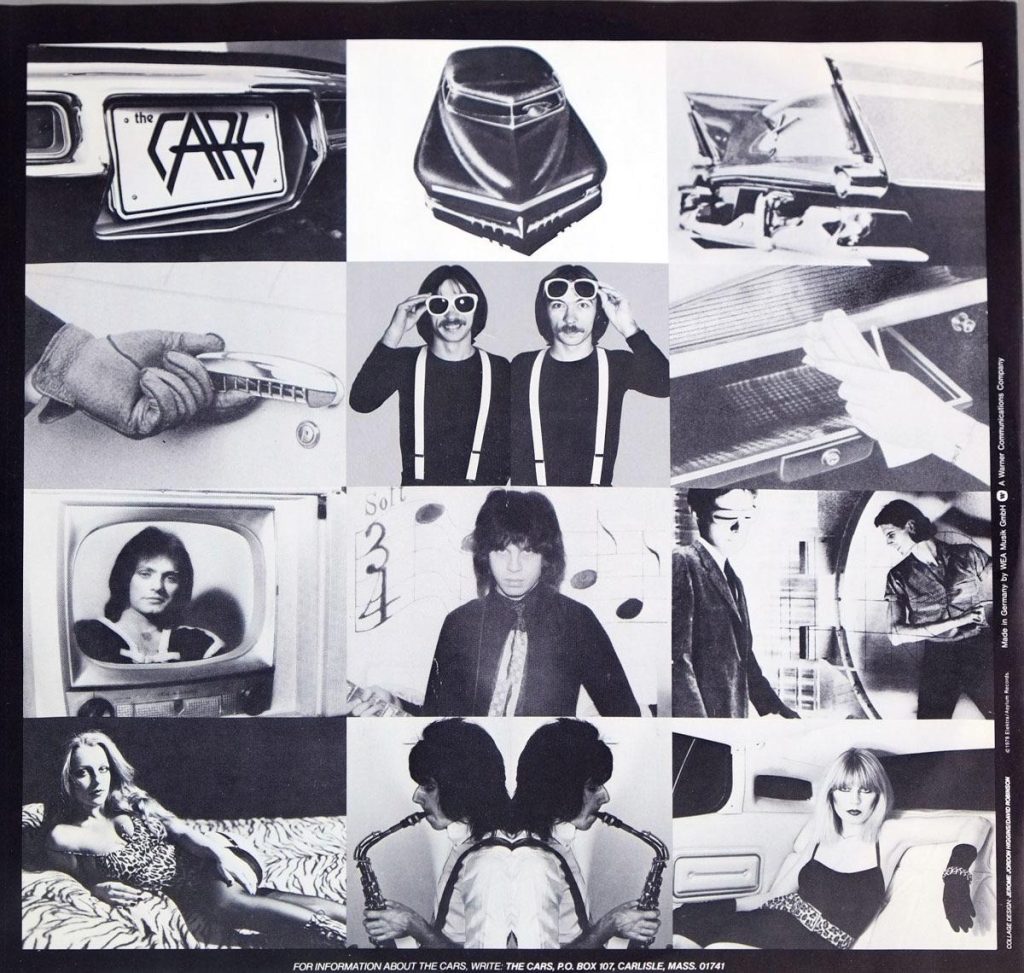
They ended up not picking the collage partly because it didn’t fit thematically and partly because of copyright issues. The photo was saved for the inner sleeve of the album. The song “Just What I Needed” is, to me, about the girl on the cover. The singer states that he doesn’t care if she bothers him and wastes his time because he likes her so much.
“”I don’t mind you comin’ here And wastin’ all my time / ‘Cause when you’re standin’ oh, so near I kinda lose my mind”
This song wouldn’t stand out so much if that’s all there was to it, though. What adds a layer of depth is the chorus, where the singer reveals that he needs “someone to feed” and “someone to bleed.” This implies that he takes pity on the girl, and he enjoys the dynamic of caring for someone who seemingly isn’t capable of taking care of herself. At first it seems sweet, but then it twists into something sinister. This contrast of warmth and cold callousness is fascinating and offers a sort of strange window into the realm of codependent relationships.
”I guess you’re just what I needed, I needed someone to feed / I guess you’re just what I needed, I needed someone to bleed”
- “I’ll Fly for You” by Spandau Ballet from Parade
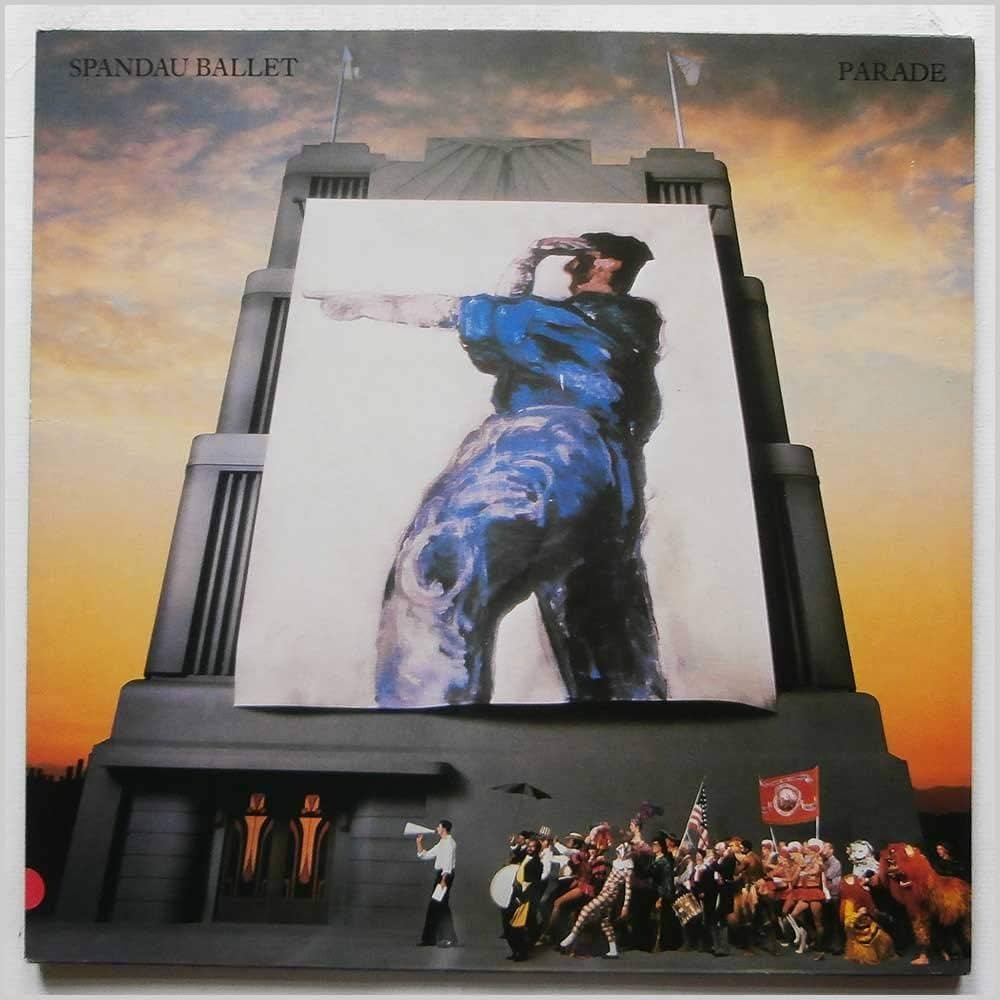
This song is track 3 on the 1984 album Parade by Spandau Ballet. The cover shows a bunch of random figures that make up the aforementioned parade, including harlequins, soldiers, and a marching band, among the band themselves and many others. The band’s guitarist, Gary Kemp, came up with the idea for the cover, as he always compared going on tour to a parade. It was because a parade was akin to both a military formation and a circus, which Kemp felt were apt descriptions for touring. A way I would describe the cover is as a protest, as it is pictured directly in front of a looming building, and the man heading the parade wields a megaphone. The large poster hanging from the building points the way forward for these ragtag members of some kind of resistance. In the song “I’ll Fly for You,” the singer feels powerless as a joe-shmoe type of regular guy. He makes lofty promises to his lover, as he believes in the power of change and nonconformity. He reminds his lover that they may not have a lot of leverage in the system they fight against, but their spirit transcends that status.
”Passion, take the wind And break me from this tie / We’re mortals on the Earth Oh, but God’s up in the sky”
He admits to his lover that he may not have earthly acclaim and possessions to offer, but he is willing to do anything for her, hence the line “I’ll fly for you.”
“Because I’ve nothing else here for you / And just because it’s easier than the truth / Oh, if there’s nothing else that I can do, I’ll fly for you”
He loves her so much that he’s willing to sacrifice his pride for her and what he believes in. He thinks their love is special in spite of the world telling them they are both nobody.
“I’m just an average boy / You’re more than an average girl / And when you sing to me the ‘shoo-be-doos’, you sing so well / And don’t you know that when I’m under you, I’m overjoyed?”
- “Sir Duke” by Stevie Wonder from Songs in the Key of Life
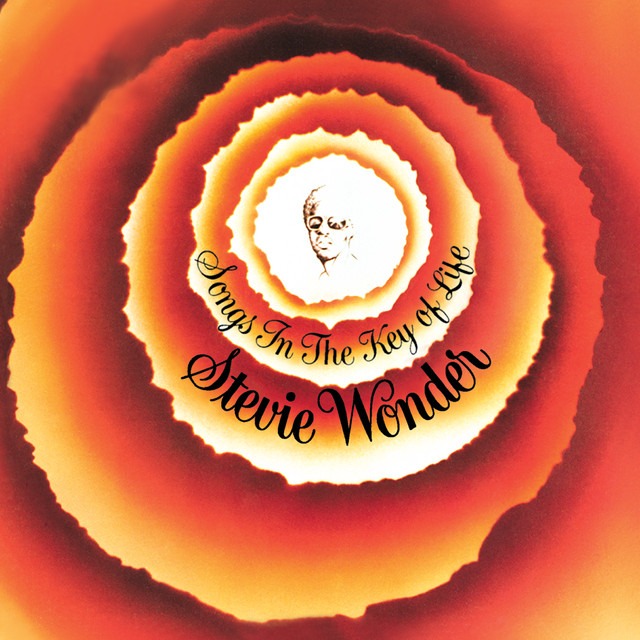
This song is number 5 on the album Songs in the Key of Life by Stevie Wonder, his 18th album from 1976. The cover contains circles inside circles in beautifully warm shades of orange. If I were to guess, it looks to be a photograph of layered pieces of paper with a strong light shining through. I couldn’t find any information on how the cover was made, unfortunately, so this is just speculation. In the smallest circle is a drawing of the artist Stevie Wonder himself. The song is an ode to jazz and its history, name-dropping jazz icons like the titular Sir Duke Ellington, Louis Armstrong, and vocalist Ella Fitzgerald, among others.
”For there’s Basie, Miller, Satchmo And the king of all, Sir Duke / And with a voice like Ella’s ringing out, there’s no way the band could lose”
It is also, as a whole, a loveletter to music as an artform. The song drives home the idea that music brings people from all walks of life together, which is why the title of the album is so apt.
“Music is a world within itself With a language we all understand With an equal opportunity For all to sing, dance, and clap their hands”
Music is something that is felt all over the world, and it will stay that way for as long as we keep making it.
“Music knows it is and always will Be one of the things that life just won’t quit”
- For You, Ago, For You
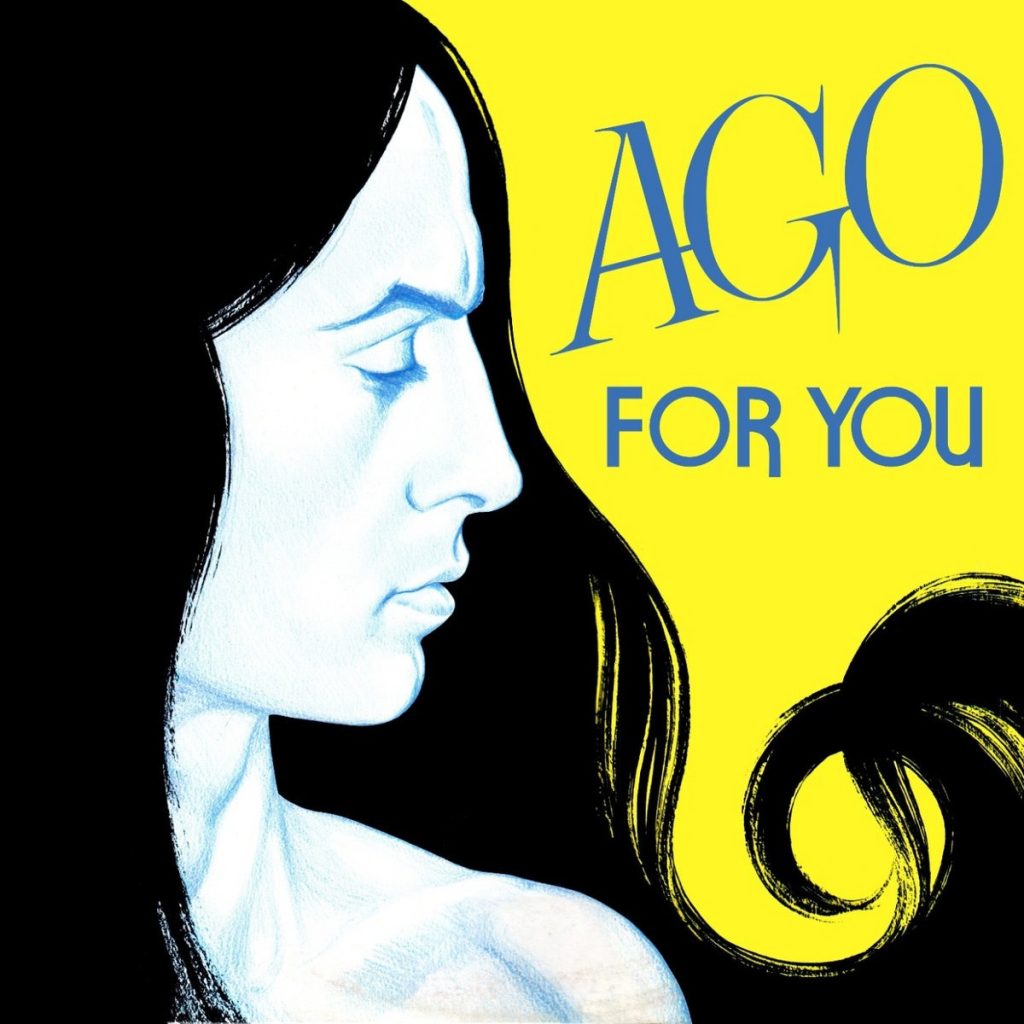
This song is the first track on the album For You by Ago, their debut album, released 1982. The cover is a drawn portrait of the main figure of Ago, Agostino Presta. His face is outlined and lightly shaded in a ghostly blue, with everything else left white. This artistic choice makes him look almost as if he were glowing. His long flowing hair frames his side profile and separates it from the bright yellow of the background. This cover is simple, but effective and memorable. The singer tells his lover that he wants to give the best of himself, and that everything reminds him of their love. His dedication to their relationship is strong and heart-warming.
“I want to give you The best of me in your life / Everything I see And everything I touch / Brings me straight to you”
The cheery tone of the song is like the yellow of the cover, while the portrait is like the intimacy and soft vulnerability of the lyrics. He is drawn to his partner like a magnet, and he wants nothing more than to be with her.
“So now I’m leaving my house And I’m walking down the street / To find a telephone to call you / I’d like to be faster than wind To be now by your side”
The title of the song is never actually sung, but it is implied to come after the lines in the chorus, as in “is there anything I can do (for you)?”and “there isn’t anything I won’t do (for you). This song is a testament to the spoken and unspoken devotion present in every loving relationship.
“Is there anything I can do? There isn’t anything I won’t do”
- “In the Stone” by Earth, Wind & Fire from I Am
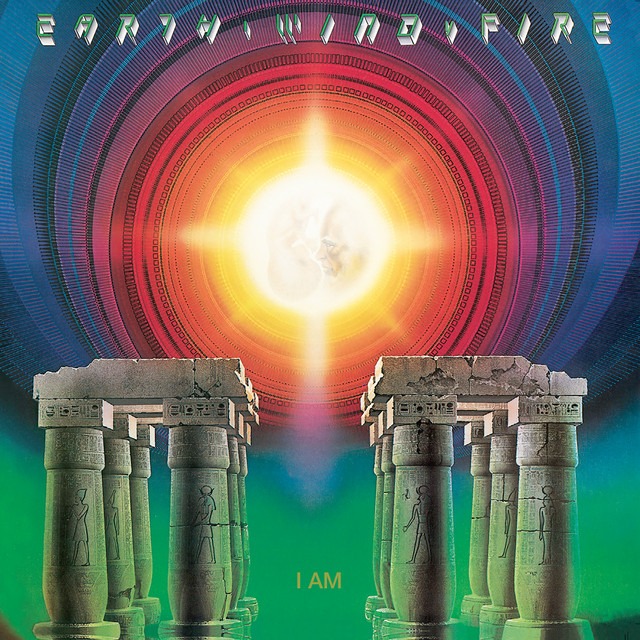
This song is the first track on the 1979 album I Am by Earth, Wind & Fire, their ninth album. The cover was made by artist Shusei Nagaoka, who has made a bunch of Earth, Wind & Fire’s other album covers and has also worked for other influential bands. The concepts for their album covers are credited to Maurice White, the band’s leader, songwriter, and drummer. The art is supposed to represent the globalization of the world and the conflicts within it. The cover depicts pillars from ancient ruins with Egyptian gods carved on them. In the center is a bright yellow sun with a man’s face in it, possibly God. The sun radiates from orange to pink to purple to blue, with a green mist covering the pillars at the bottom of the cover. This beautifully vibrant palette is immediately eye-catching and visually stunning. The song “In the Stone” speaks about the power of love, and how it is a force that is “written in the stone,” more powerful above all else.
”I found that love provides the key / Unlocks the heart and souls of you and me”
The song states that time is fleeting, and all that remains is love. When people understand that, they are able to see past what is immediately in front of them in their lives, and they can see the world for what it really is.
Every man I meet is walking time / Free to wander past his conscious mind / Love will come and take you home, yeah Love is written in the stone”
The things we convince ourselves are important in life are, in actuality, very trivial and temporary. What connects everyone together and remains in the end is love.
“In the stone, the light is shining Ever touching all”
- “Reflections” by Lionel Azulay from Out of the Ashes
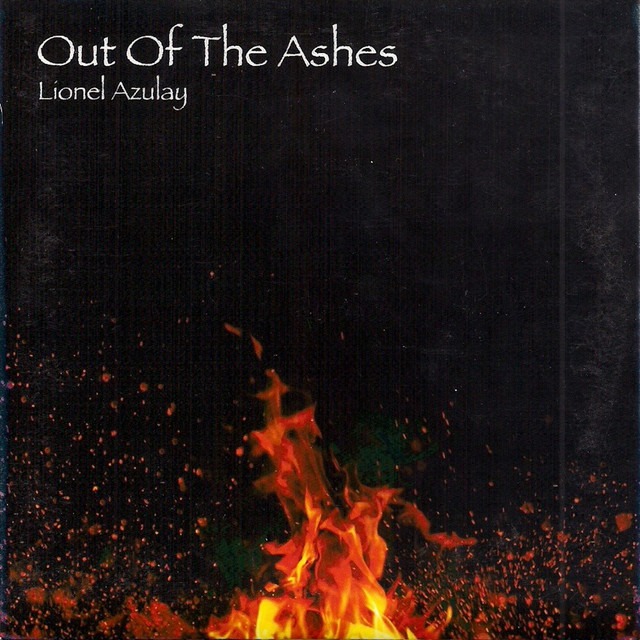
This song is track 1 on Lionel Azulay’s only album Out of the Ashes, released in 2008. The only other music he released was a single collaborating with Kate Bush called “Wouldn’t Change A Thing” recorded in the 90’s. He played drums with Del Palmer, Kate Bush’s ex seen on the first album cover of the article. This cover features a bright, dancing flame as sparks fly up against a dark background. This album features lettering in the Papyrus font, which I believe is one of the only good uses for it. The song “Reflections” feels like reflecting on the happenings of the day while staring into a bonfire. The singer, however, seems to be reminiscing about good memories that are now a thing of the distant rather than recent past. He sings about how it felt like “those days were never-ending.”
“Reflections floating through my mind, / Reflections photographs in time / Reflections keep my company, / Recollections of how things used to be”
He feels as if those days were gone too soon, and that time stole them away “like a thief.”
“Those precious moments oh so brief that time has stolen like a thief”
Now, all he can do is sit with the memories as night falls and he stares intently into the fire.
“And as the night arrives and covers me in black, I simply close my eyes and I just look back”
- “End of the Day” by Al Stewart from Time Passages
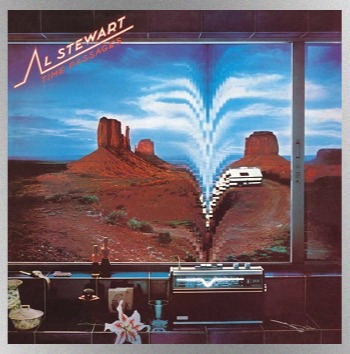
This song is track 9 on the album Time Passages by Al Stewart in his eighth album from 1978. The cover shows the view through a window of some butte rock formations in the desert of the American west. Out in the distance is an RV trailer. The landscape is being warped by the radio in front of the window, representing the titular “time passages” as they change the world around us. The song “End of the Day” is about a woman who dreams of escaping the life she knows, away from her small midwest town.
“She wants to run out where the day meets the night / Far beyond these midwest farms But she’ll be with him till the day she finds / A stranger lying in her arms”
She feels as if her current relationship is keeping her stuck where she doesn’t want to be. She wants more from life but she doesn’t know how to get there. She doesn’t feel in love with the man she’s with, but part of her wants to make it work. She realizes, though, that trying to hang on will only make inevitable changes harder. The way I interpret the cover, I think the woman the song is about is listening to the radio, reflecting on the way her life once was in this unhappy relationship, until she goes through the passages of time and inexplicably finds “a stranger lying in her arms.”
“Nothing lasts, well she knows, try to hang on When it’s gone, you’ll be burned / Fashions and friends come and go Everyone travels that road in their turn”
- “The Logical Song” by Supertramp from Breakfast In America
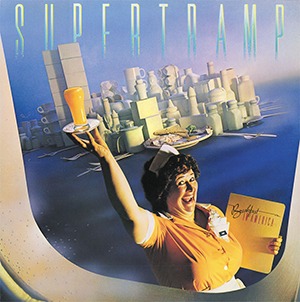
This song is track 2 on the 1979 album Breakfast in America by Supertramp, which is their sixth album. The cover is a playful take on American sensibilities. The concept came from art director Mike Doud and was photographed by Aaron Rapoport. The composition illustrates a jovial waitress named Libby, played by actress Kate Murtagh” as the Statue of Liberty as seen from the view of a plane. She proudly holds a glass of orange juice above her head. Behind her is a scene of New York City, completely made up of cups, plates, utensils, milk gallons, egg cartons, and other pieces of kitchenware and food packaging. It serves as satire on the optimism of the US during the time the album was released, and, in a similar way, “The Logical Song” pokes fun at the concept of “polite society.” The singer remembers a time when he was young and not jaded by the weight of the world’s expectations of what a functioning member of society is supposed to look like.
“When I was young, it seemed that life was so wonderful / A miracle, oh, it was beautiful, magical”
The singer mentions being “sent away,” possibly to school, to grow up and put away childish imagination and wonder.
“But then they sent me away to teach me how to be sensible / Logical, oh, responsible, practical / And then they showed me a world where I could be so dependable / Oh, clinical, oh, intellectual, cynical”
The singer struggles to define who he is in a world where he feels like he can’t be himself.
“There are times when all the world’s asleep / The questions run too deep / For such a simple man / Won’t you please, please tell me what we’ve learned? / I know it sounds absurd / Please tell me who I am”