As of October 8th, 2023, 501 proposed bills attack the rights of queer people. Of those bills, 84 have passed into law and 190 are still open for a decision. The ACLU has a tracker with live updates here. These legislations fall into a number of categories, and you can help influence decisions by contacting your representative and recommending that they vote not to allow it to pass.
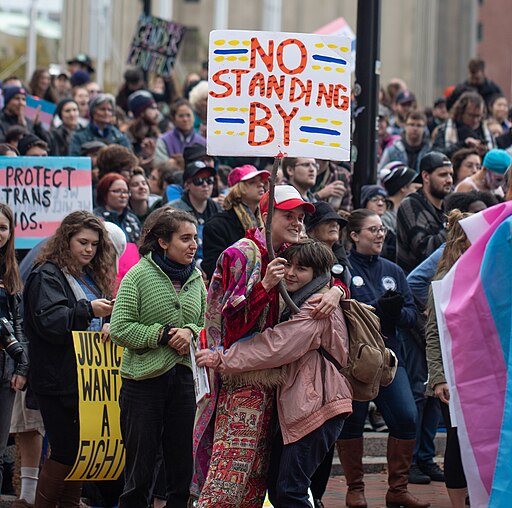
Kai Medina (Mk170101), CC BY-SA 4.0, via Wikimedia Commons

What are these bills about?
The ACLU has seven main categories that these bills are sorted under, including a miscellaneous one. These categories relate to specific issues that come up a lot, and that are relevant to a lot of queer people around the country. They include:
- Schools and Education: These bills deal with curriculum, teacher interactions with students, and extracurricular activities. They make moves to ban schools from teaching queer topics. A lot of them require teachers to refer to students only by the name and pronouns listed on school documents, and to tell parents if a student is using a different name or set of pronouns at school, which can cause safety issues depending on the parents’ reactions. Then there’s making it so that sports are strictly separated by assigned gender, meaning that trans kids wouldn’t be able to be on sports teams that are in line with their gender.
- Healthcare: These bills ban and criminalize gender affirming care for trans people. They either make it outright illegal, or add roadblocks with things like insurance that make it difficult for trans people to seek these sorts of medical treatment. It’s worth noting that generally the treatments themselves aren’t targeted, just their usage specifically for transitioning purposes. States are still perfectly fine with these treatments for cisgender or intersex people.
- Public Facilities: These bills require people to use public restrooms and locker rooms that strictly align with their assigned gender. It functionally outlaws trans people using public restrooms.
- Free Speech and Expression: These bills have been focused on drag lately. They would make it illegal for someone to do drag around minors. It also deals with book banning. Many books around the country are challenged for discussions of queer issues or for providing queer representation. They enforce book challenges, making it easier to have books removed from school and public libraries. Book bans tend to disproportionately affect queer people and people of color due to the subjects of widely challenged books.
- Legal Identification: These bills make it more difficult for people to legally transition. They add roadblocks to updating records such as driver’s licenses and birth certificates. This can affect trans people’s job prospects, housing, medical care, and can put them at an increased risk of harassment.
- Civil Rights: These bills roll back anti-discrimination laws that are already in place. They allow places to turn people away for being queer, including hospitals and employers. This threatens the lives and well beings of queer people around the country.
What can you do?
- Get involved: Join an advocacy group in your area. They’ll generally have plans for actions to take against anti-queer legislation. There are some nationwide groups that you could join, such as The Trevor Project. You could also find local ways to get involved. Your local public library is likely to be a great resource for that!
- Contact your representatives: You can make phone calls, send letters, or write emails asking your state legislators to oppose certain bills. There are steps you can take to do that below. Your local library can also generally help.
- Vote: Contacting your representatives can only go so far. Even if a lot of people want them to make a certain choice, there’s no guarantee that they’ll actually do so. However, they get elected differently from presidential candidates. The people they represent have a direct say in their election. If you’re not happy with your elected officials on a local level, you do actually have the power to influence change there! Make sure that you’re using your say wherever you have one. Even if it seems like it won’t make a difference, chances are that it will.
- Spread the word: Bother everyone you know into also doing the things listed above! While they’re great on their own, these actions are most effective when a lot of people do them. We all know there’s a lot of corruption in the government (sorry to burst your bubble if you didn’t) but your representatives are ultimately there to represent the views of the people in your area. If enough people want them to make a certain choice, they’re more or less likely to do so.
How do you figure out who to contact?
On the ACLU website linked at the beginning, if a bill starts with an S, then you contact your state senator, and if it starts with an H, then you contact the representative for your district. If you live in Nebraska, then this distinction isn’t important, since unlike other states, which have a bicameral system, Nebraska’s state legislation is unicameral, meaning that there’s only one house instead of two. For example, Iowa has SSB 1145 introduced right now, so you’d contact the state senator and ask them to oppose that bill. Iowa also has HSB 208, so that’s when you’d contact your state representative. Make sure that you’re contacting your state legislators as opposed to national ones.
You can figure out who your senators and representatives are by visiting this page on the Rock the Vote website. From there, you can input your address and your zip code, and they’ll give you a list of any elected official that impacts you on a state or federal level. I have my representatives pictured below as an example. Click on your state (circled in red).
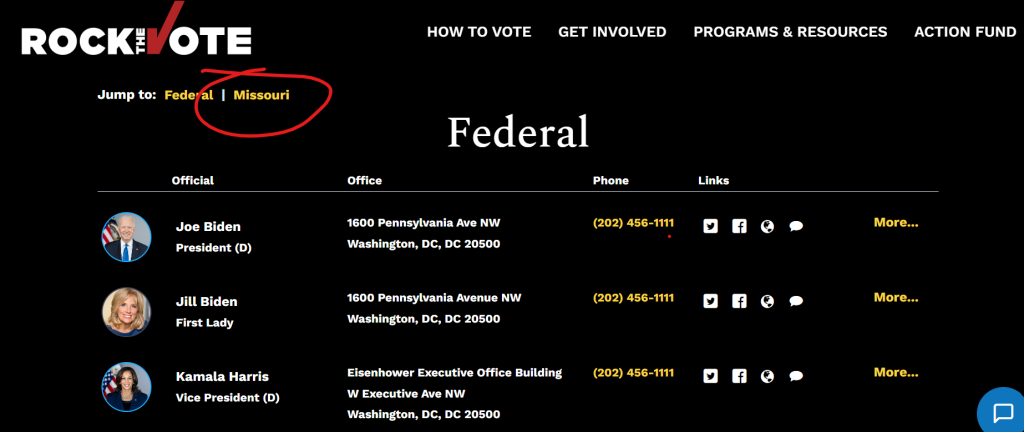
From there, scroll all the way down, and it’ll show you your senator and representative. You can send them a letter at the address listed or call their office using the number. To send them an email, click on the icons circled in red below to go straight to their email, visit their website, or contact them through their website.

What do you say?
In the beginning, make sure to clearly state basic information. Tell them which district you reside in. This would be the last line on the Rock the Vote website, under where it says that the person is either the senator or the representative (circled in picture above in blue). Include the bill that you’re talking about in the subject line of an email or in the first line of a letter, and clearly state your stance. Then, give the reasons you oppose it. Below are some common arguments against the sorts of bills listed above.
- Curriculum: If people are less educated on queer topics, then they’re likely to be less accepting. These laws generally ban lessons on pronouns, which is a grammatical thing, as well as part of basic human decency. Parents shouldn’t necessarily get a say in what public schools teach, since a school’s purpose is to serve a community, not to cater to parents.
- Teacher Interactions: Referring to someone by their preferred name and pronouns is just a polite thing to do. On top of that, outing queer kids to their parents risks putting them in harm’s way. Parents aren’t always accepting, and there are instances where outing a kid can subject them to abuse.
- Sports: There’s not much of a tangible biological difference, especially in kids. No one is transitioning and putting themselves at risk for harassment and persecution and completely changing the way they live their lives just for a school sports team. It’s a school sports team, so it’s actually not that big of a deal.
- Gender Affirming Care: Gender dysphoria is actually a mental health problem. Gender affirming care is actually not as drastic as people think when done on younger people. It’s more likely to entail puberty blockers as opposed to gender reassignment therapy or surgery. No one really cares if cis people seek some sort of gender affirming care. Outside of the fact that it is a medical necessity in certain cases, it’s also a matter of bodily autonomy. People aren’t forced into it in the challenged cases, just the ones deemed okay.
- Restrooms: Trans women aren’t predators. There aren’t nearly enough trans women who are predators that having a fear of predatory trans women is reasonable. No one is transitioning and risking harassment just to use a different restroom. Being able to use the restroom while in public is a human right, and we shouldn’t be taking that away from trans people. Maybe we don’t need to be overly involved in other people’s restroom use.
- Drag Shows: Drag queens aren’t predators. Drag shows aren’t necessarily inappropriate. Cross dressing is ultimately pretty harmless. If parents don’t want their kids seeing certain things, it should be their responsibility to regulate that, and not the responsibility of the people doing the things.
- Censorship: It infringes on the rights protected in the first amendment. Representation is important to mental health. It makes it easier to keep people from forming their own thoughts on things. It tends to disproportionately affect marginalized groups.
- Identification: Depending on how someone presents, it can out them and put them in unsafe situations. It can add to dysphoria.
- Civil Rights: Discrimination is bad. It took a while for this country to get where it is today with civil rights, so how about we don’t go around undoing that. It puts people’s lives and livelihoods actively at risk.
Finally, state what you would like them to do. With bills like these, you generally want to ask that they vote against them. Then, sign your name and send it!
Will it actually make a difference?
Yes! It will! For the same reason that it’s important to vote in your local elections, this is a chance to take direct action. Again, the more people do something about these legislations, the more likely these actions are to enact change. This means that every contribution helps. So go out there and help protect queer people near you!