
The miseducation of Cameron Post was written in 2012 by Emily M. Danforth. It’s the coming of age story of Cameron Post. It follows her life from the age of 9 to 16 as she deals with the loss of her parents, the realization that she’s a lesbian, and being sent to a conversion camp by her aunt. It has a bit of a dry writing style but is interesting throughout.

I remember the first time I read this book. I was in 10th grade, I had recently been coming to terms with being a lesbian, and I was working in my school’s library. As I was reshelving books I found The Miseducation of Cameron Post. I think I immediately pegged it as queer book based on name alone and I decided to check it out for myself. And I loved it. There are quite a few lesbian and sapphic books out there, for sure, but there weren’t many at my school (despite us being particularly queer) and I had never really read a queer book that centered someone who wasn’t a man. I enjoyed it because it helped me reach out to the not-so-distant past of the 90s and feel like I was connecting on some level with that queer community.
The movie expands on ideas in the book and although it has to cut out certain things, as all adaptations do, it does so well. It does a great job of telling the story with nuance, drama, and humor. Possibly my favorite part is that it reintroduces characters in the book and decides to change them to adapt to our changing beliefs and culture. This adds to the story and their individual character development, and although it’s been done to add more representation it feels authentic and allows the story to explore other directions and queer things happening in the 90s. As well as the specific breed of racism experienced by indigenous peoples, specifically regarding two-spirit people.
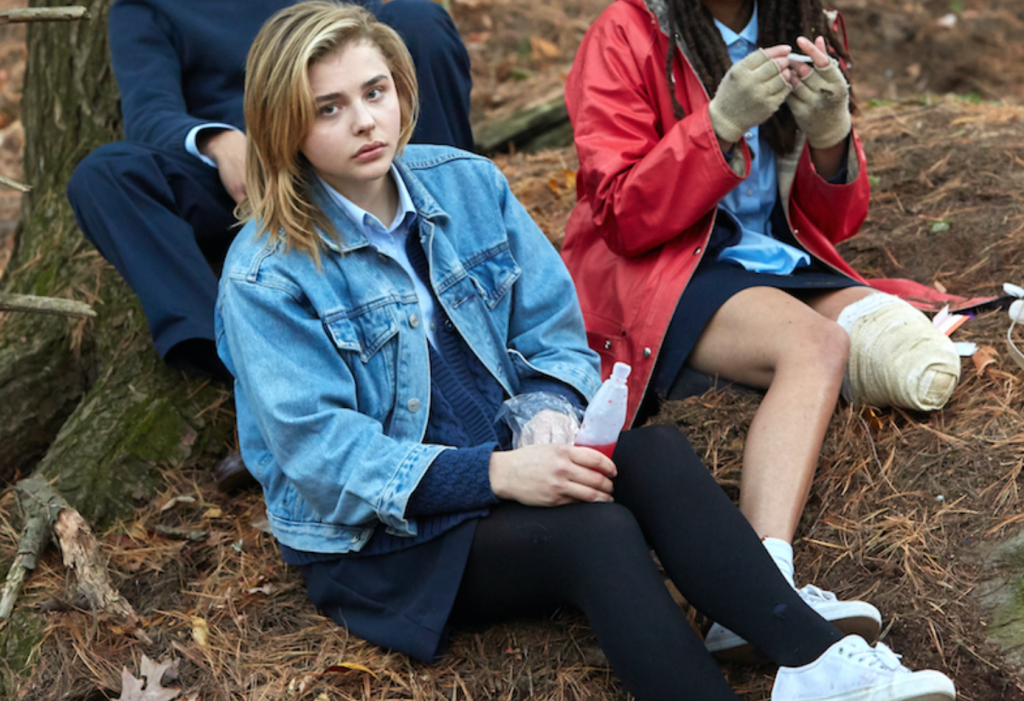
However, because the film begins when Cameron is sent to the conversion camp, it’s harder to really get into her character in the same way that you can with the book. And it can cause a more shallow reading of her character which is unfortunate. But that’s really the only complaint. and the author herself believes that the screenwriters screenwriters “beautifully condensed the storyline without sacrificing its voice and spirit.”
The movie ends up focusing on the camp itself more so than any one character even though we see it through the eyes of Cameron. I personally have watched my fair share of movies about conversion camps and this is one of my favorites, it is of course beneath But I’m a Cheerleader for obvious reasons. At least it’s hopeful all the way through. You get a sense for the characters in a way you don’t always get with movies about conversion camps. And the movie and the book are great at portraying the nuance of conversion therapy, that the adults aren’t all two-dimensional villains (although it doesn’t absolve them) and that some of them genuinely want to help but are unaware of just how incredibly damaging and unnecessary their ‘help’ is.

It’s not about how technically good a movie or show is, but what it can do for its target audience and how well it does it. In this case, this movie is fantastic. It allows younger queer people to connect with other identities and circumstances, and to connect with the past. I love this movie, and I love the book. The book is better but the movie adds onto it and takes away in interesting ways. It falls short in some cases and rises above in others, but it’s good and it’s fun and it’s gay.