
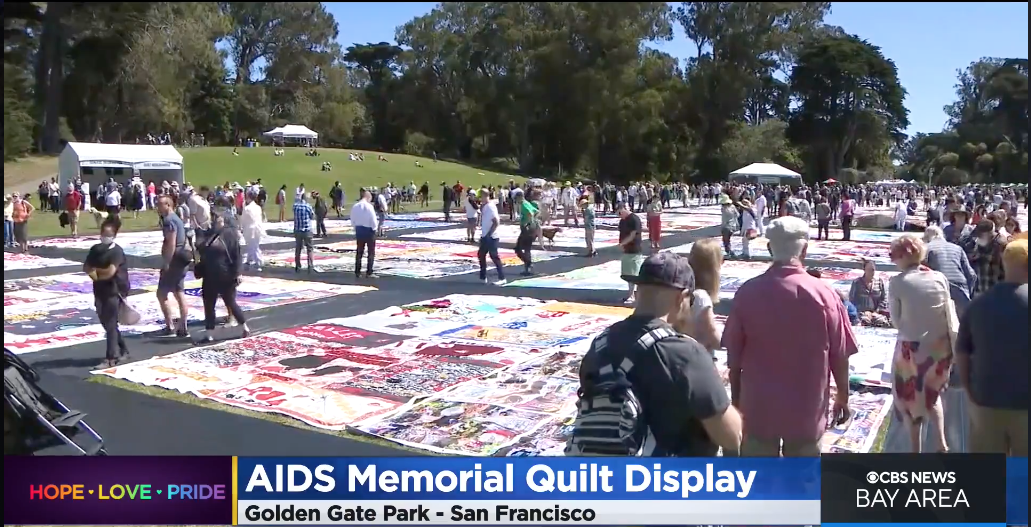
The first reported cases of HIV and AIDS among communities of gay men in San Francisco and New York City in June of 1981 sparked the beginning of the devastating AIDS epidemic. Since then, more than 700,000 people have died stateside, and upwards of 40 million have died of AIDS related illnesses internationally.
The AIDS epidemic forced millions of people to reckon with the impermanence of life, and necessitated conversations regarding sexuality nationwide. Originally, the focus was on the queer populations which it most publically affected; it was even initially referred to as GRID (Gay-Related Immune Deficiency) before being renamed to reflect its actual impact on various other populations. The stigma and derision it enforced on gay populations, especially gay men and transgender women, still remains today, though through the work of millions of dedicated allies, some of the discrimination has been replaced with understanding and compassion.
Amidst this crisis, lesbians and other queer women rose to the forefront of the response; many straight people, medical professionals and healthcare workers included, were unwilling to interact with afflicted patients out of a misplaced and often bigoted fear of contagion. The government response was initially (and arguably purposefully) sorely lacking, so lesbian volunteers and nurses stepped up in droves to provide frontline care to these deserving yet shunned young men.
You may have heard of the AIDS Memorial Quilt. A beautiful yet saddening art exhibit, the idea for the Quilt was first thought up by activist Cleve Jones. In November of 1985, Jones was helping to plan the annual march honoring the lives and legacies of gay San Francisco Mayor George Moscone and Supervisor Harvey Milk, who were assassinated in 1978. During his tenure as an organizer, he discovered that more than 1,000 San Franciscans had passed away from AIDS and related illnesses. Searching for a way to personalize a memorial for these souls, he requested that his fellow marchers write the names of these loved ones on large cards.
“At the end of the march, Jones and others stood on ladders taping these placards to the walls of the San Francisco Federal Building. The wall of names looked like a patchwork quilt.”
https://www.aidsmemorial.org/quilt-history
This inspired a vision of a much larger version, one that could commemorate the millions of lives lost nationwide. As such, Jones called on fellow activists in other big cities with large affected populations to do the same and send them to him, and he and his peers created fabric panels embroidered and quilted with the names of these lost men and women. Ultimately, thousands of grieving loved ones quilted a memorial to their loved ones and the panels were combined into a massive physical quilt. At its initial display in 1987, the Quilt took up just more than a football field’s worth of space. Currently, it spans 1.3 million square feet and weighs 54 tons.
It used to be that the only way to see the AIDS Memorial Quilt was to wait until it came on tour to a city near you. Though this brought out crowds of supportive and grieving queers and allies, it limited the effect the monumental art project could have at one time. Nowadays, a simple visit to the National AIDS Memorial official website leads you to an interactive version of the Quilt. You can spotlight search specific names of victims and zoom in on any of the 50,000 panels to admire the loving stitching done by their friends, families, and significant others.
Given the scale and importance of the project, it makes sense that different sections of the quilt would be dedicated to different populations affected. Many of these movements came later than the original Quilt. In Texas, for example, the “Change the Pattern” movement aims to “raise awareness about HIV/AIDS and its continued impact on communities of color and marginalized populations in Texas and the South.” Texas unfortunately has the 11th highest diagnosis rate in the country, so individualized movements within the Southern AIDS Coalition seek to illuminate the effect it has had on populations of color. They have added more than 500 new quilt panels in honor of these Black and Brown lives lost, which were exhibited publicly for the first time in May of 2023.
The National AIDS Memorial resides in the Bay Area of Northern California. They offer scholarships, programming, and volunteer opportunities for folks who are interested in supporting their cause. In the center of San Francisco’s Golden Gate Park lies the National AIDS Memorial Grove. This is a 10-acre permanent memorial for all affected by AIDS, survivors and victims. Thousands of individual names of those who have died and those who loved them are carved in stone throughout this gorgeous yet harrowing garden.
Different sections of the Grove are dedicated to different specific groups. The Hemophilia Memorial Circle is dedicated to the “guardians of the nation’s blood supply”. Hemophilia is a rare genetic disorder that affects a person’s ability to properly form blood clots. In the ‘80s, it was treated using a medicinal “clotting factor” found in blood donations. Once it was discovered that people living with hemophilia were getting sick and being diagnosed with HIV, they realized that the nation’s blood supply was tainted. The government and drug corporations ignored the affected’s cries for help, so the community took it upon themselves to keep their own safe. The Hemophilia Memorial Circle commemorates these heroes.
The Artist’s Portal is dedicated to the deep loss felt by the artistic community is the face of the AIDS crisis. This area of the Grove was originally inspired by the “Fifth Section” of the San Francisco Gay Men’s Chorus, which is meant to memorialize the over 300 voices of the choir that were silenced by AIDS/HIV. In 2011, Tom Seelig, the director of the Chorus, came to the National AIDS Memorial with the goal of a permanent exhibit acknowledging the devastation AIDS had on Hollywood, Broadway, the fashion world, and art galleries around the country.
“Thousands of people have died in San Francisco, millions in the world. The point of the National AIDS Memorial Grove is to remember them, one at a time.”
Congresswoman Nancy Pelosi
I implore you to explore the interactive AIDS Quilt online. Zoom in on any of the 500,000 panels and reflect on the lives of these thousands upon thousands of loving and loved victims. Their names and lives should be remembered in perpetuity, and may their memories be a blessing.